


How CAIHE 2026 Helps Buyers Source Hardware in Central Asia
CAIHE 2026 gives international hardware buyers something the region has not had before: one scheduled place to compare Central Asian demand against Chinese and international supply. The Central Asia International Hardware Expo runs from 24 to 26 November 2026 at Uzexpocentre in Tashkent, with more than 200 international exhibitors across power tools, hand tools, fasteners, building hardware, welding equipment and safety gear. It is a first edition, so there are no past attendance figures to quote and no legacy to borrow. What it has instead is timing: 750+ large-scale projects and more than a million new homes planned in Uzbekistan by 2030, and a distribution sector that is actively reworking its supplier lists.
Why International Buyers Are Looking at Central Asia Now
Uzbekistan’s construction programme is the visible driver. The 750+ projects and the housing target create steady demand for the categories that finish a building: locks, hinges, sanitary hardware, fixings, abrasives, safety equipment and the power tools that install them. Local production covers part of that range. The rest arrives as imports, mostly through distributors in Tashkent and the regional trading hubs that supply the surrounding republics.
That import structure produces three kinds of buyer, and they behave differently. Uzbek distributors buy for their own national network and care about credit terms and stock rotation. Re-exporters from Kazakhstan, Kyrgyzstan and Tajikistan buy for a multi-country route and care about documentation that clears more than one border. Project procurement teams buy against a bill of quantities and care about delivery dates more than unit price. A supplier who suits one group is not automatically right for the others.
The most common mistake we see from first-time buyers is treating Central Asia as one market. It is not. Uzbekistan runs its own national conformity system, Kazakhstan and Kyrgyzstan apply EAEU rules and the EAC mark, and each neighbouring state has its own import practice. A product that clears customs in Almaty can still need additional paperwork in Tashkent. Buyers who plan for one border usually end up re-planning for three.
What CAIHE 2026 Actually Adds to a Sourcing Trip
A trade fair does not replace supplier research. It compresses it. In three days you can have with twenty suppliers the conversation that would otherwise take three months of email, and you can put two drill ranges on a table side by side instead of comparing rendered photos.
CAIHE 2026 is organized by Koelnmesse and Inter Dialog, with the China Chamber of Commerce for Machinery and Electronic Products (CCCME) and the Chamber of Commerce and Industry of Uzbekistan as partners. The organizer network matters for one practical reason: it shapes which exhibitors turn up. A hardware fair run by a company that already runs hardware fairs tends to attract manufacturers who exhibit on that circuit, which means the supplier you meet in Tashkent is often one you can cross-check through a channel you already know.
The honest part is the newness. There are no past visitor numbers, no floor plan history, and no way to claim that something worked last year. What a debut edition offers instead is access. Quieter stands mean longer conversations, faster quotations, and a better chance that a manufacturer will open a new territory with a modest first order. Buyers who wait for the third edition will be competing for that attention with everyone else.
Which Product Categories You Can Compare Under One Roof
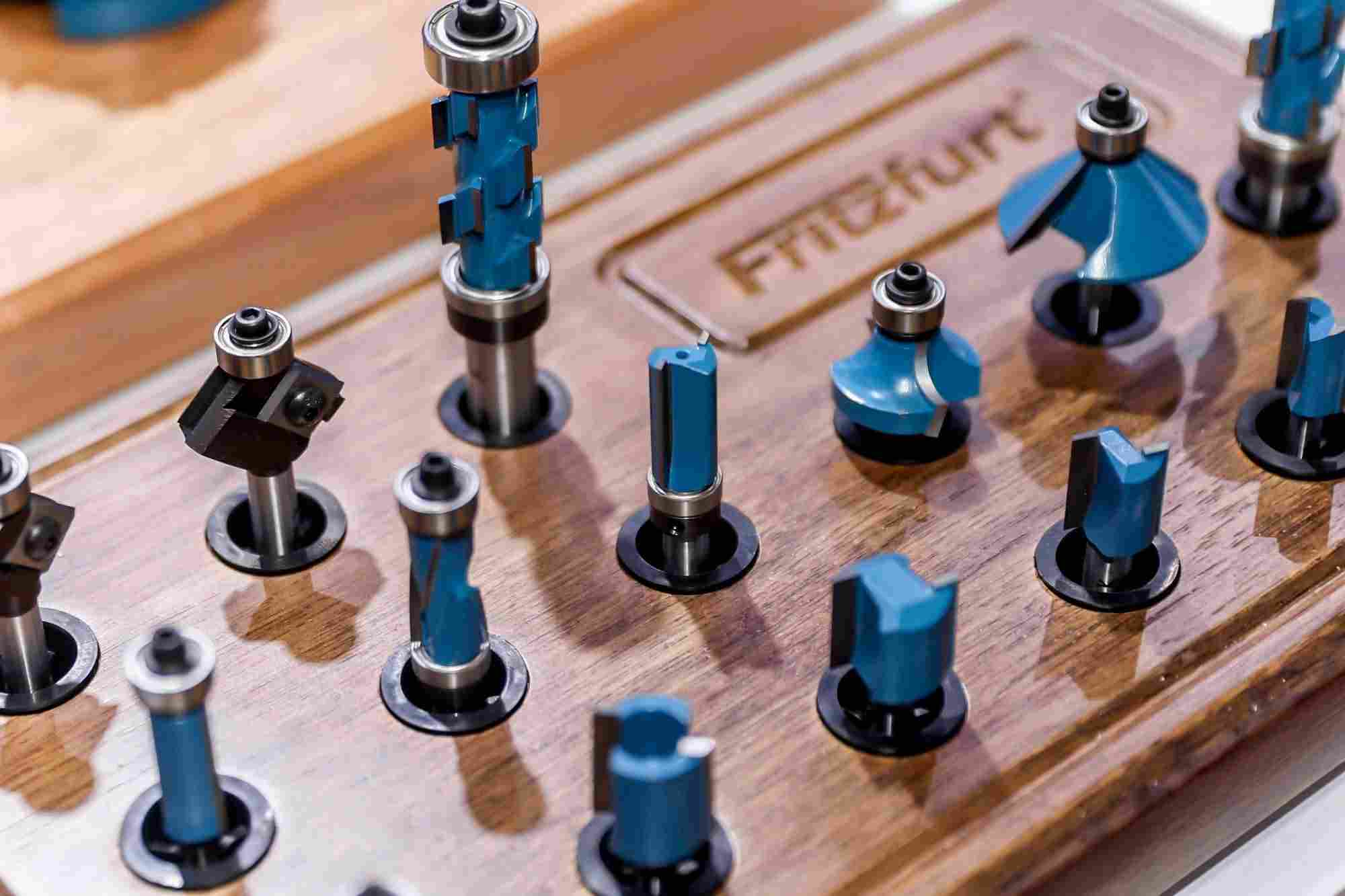
Hardware is a broad word. The range at CAIHE 2026 is organized around what a Central Asian distributor actually stocks, which is narrower and more practical than a general catalogue.
| Category | Who buys it | What to check at the stand |
|---|---|---|
| Power tools | Distributors, rental fleets, contractors | Voltage and plug type for the destination market, spare part availability, battery platform continuity |
| Hand tools | Wholesalers, retail chains | Steel grade and heat treatment claims, handle attachment, packing for long transit |
| Fasteners and fixings | Construction suppliers, project procurement | Coating class, thread tolerance, test report per lot, carton marking |
| Building hardware | Retail chains, fit-out contractors | Finish durability, cycle testing for locks and hinges, key system compatibility |
| PPE and safety | Industrial buyers, distributors | Certification scope, sizing range, replacement part availability |
| Welding and abrasives | Fabricators, MRO buyers | Duty cycle, consumable compatibility, storage and shelf life |
The list is a starting point, not a promise that every exhibitor covers every line. Download the exhibitor list before you travel, mark the stands that fill a gap in your own range, and leave the categories you already source well to someone else.
A Three-Gate Method for Working a Debut Fair
A first edition has no reputation to guide you, so the process has to carry the weight. We suggest running every supplier through three gates, in order, and stopping at the first one that fails.
Screen before you fly. Build a shortlist of no more than fifteen exhibitors. For each, record the category, whether it is a factory or a trading company, the export markets it already serves, and the single gap in your range it could fill. Anything you cannot answer from public information becomes a question for the stand.
Verify at the meeting. Ask for the documents covered two sections below, ask for a live video walk through the production line if the factory is not represented in Tashkent, and ask which markets the exact model is already sold in. Record the answers in the same format for every supplier, so the comparison stays like for like.
Trial before you commit. A sample order or a small trial order with written acceptance criteria tells you more than any stand conversation. Define what pass looks like, and who pays for rework, before money moves.
The method is deliberately boring. Its value is that it produces a comparable record for every supplier you meet, which is exactly what a first-edition fair does not hand you by default.
What to Ask Every Supplier Before You Leave Tashkent
Most disappointing first orders trace back to a request too vague to fail. A supplier cannot be wrong about a specification nobody stated.
| Ask for | Why it changes the answer |
|---|---|
| Exact model and configuration | A price for a 20V drill may mean a bare tool, a kit, or a different battery platform |
| Certificate scope with the model list | A certificate covering one model says nothing about the variant you ordered |
| Test report with method and sample date | A pass value without its method cannot be compared with another supplier’s pass value |
| MOQ and price breaks per model | A low MOQ on one line often hides a higher MOQ on the accessory you actually need |
| Production lead time and current slot | A lead time without a booked slot is an estimate, not a commitment |
| Packing, carton marking and pallet spec | Retail-ready and bulk packing are different cost lines and different damage risks |
Here is the difference in practice. A vague request reads: best price for 5,000 pieces of medium-quality hinges, delivery as soon as possible. The version you can hold a supplier to reads: model number and finish, material and thickness, certificate and test report for that model, 5,000 and 10,000 piece price breaks, production lead time with the week the order enters the line, carton quantity and pallet configuration, payment terms, and the inspection option before shipment.
The second version takes twenty minutes to write and saves months.
How to Check Certificates and Claims on the Spot
A document is evidence of something specific. The mistake is treating it as evidence of everything.
| What you are shown | What it can support | What it does not prove |
|---|---|---|
| CE declaration of conformity | The manufacturer declares the listed product meets the applicable European directive | That the production lot matches the tested sample, or that an EU authority approved it |
| EAC certificate or declaration | The listed model has been assessed against the applicable EAEU technical regulation | Cover for unlisted variants or spare parts, or compliance with the Uzbek national requirement |
| Third-party test report | The measured values on the stated sample, under the stated method | Lot-to-lot consistency, or behaviour outside the tested conditions |
| Factory photos or video | That the named equipment exists and was running when filmed | Capacity, ownership, or that your order will run on that line |
| Sample handed over at the stand | Fit, finish and function of the units you are holding | That the production run will match them |
Two habits keep this manageable. Match the certificate to the market you are selling into, not to the market the supplier usually serves, because the Uzbek national system, the EAEU system used by Kazakhstan and Kyrgyzstan, and the European CE framework are three separate questions. Your importer or customs broker is the right person to confirm which one applies to your product line. Then record the certificate number and the model list in your notes. A photograph of a certificate without the model list is not a record.

Dates, Entry Rules, and What Happens After the Fair
CAIHE 2026 runs from 24 to 26 November 2026 at Uzexpocentre in Tashkent, in Pavilions 3 and 4. Tashkent International Airport sits a short transfer from the city centre, and the venue is reachable by taxi, or by metro with a short walk at the end.
Entry is simpler than most first-time visitors expect. More than 60 countries currently have 30-day visa-free entry to Uzbekistan, which covers most of Europe, Asia and the Gulf. Nationals of countries outside that list can apply through the e-visa route. Check the current official list before you book, and check passport validity at the same time, because airlines apply the rule at check-in whatever the immigration officer might accept on arrival.
The week after the fair is where most sourcing trips are lost. Meetings that are not followed up within 48 hours go cold, and memory of which supplier said what blurs quickly. A workable cadence:
Within 48 hours: send a short recap to every supplier you shortlisted, restating what you asked for and what you understood.
At 30 days: samples in hand, acceptance criteria agreed in writing.
At 60 days: trial order placed, inspection arranged, shipping terms confirmed.
At 90 days: review the trial against the criteria, then decide on a container or an annual agreement.
Register Your Buyer Team for CAIHE 2026
The next step is registration, and the most useful thing you can send with it is your purchasing list. Tell us the product categories you buy, your annual volumes, the destination country for each line, the certification that country requires, your target price band, and the date you need goods in hand. That list is what allows the team to pre-match you with exhibitors instead of leaving you to walk the floor alone.
Buyers who qualify for the Hosted Buyer Programme receive additional support, including accommodation and shuttle arrangements confirmed in writing before travel. Places depend on buyer profile and availability, so confirm yours before booking flights.
Email zoey.yue@koelnmesse.cn or call +86-21-6390 6161 ext. 828 to register, to apply for the programme, or to ask which exhibitors match your list. Koelnmesse China and the CAIHE team will reply with the next step.
FAQ
Is CAIHE 2026 only for large importers?
No. The fair is built for the buying side of the hardware trade at several scales: national distributors, regional wholesalers, retail chains, project procurement teams, and independent importers placing a first container. The value differs by size. A large distributor comes to compare annual terms and add categories. A smaller buyer comes for mixed lines, exclusivity conversations, and a supplier willing to start with a modest volume. Programme support depends on your profile, but attendance does not.
Do I need a visa to attend CAIHE 2026?
Most visitors do not. More than 60 countries have 30-day visa-free entry to Uzbekistan, which covers a trade fair visit and business meetings. Nationals of other countries can use the e-visa route. Confirm the current list and your passport validity before booking, since airlines enforce the rule at check-in. If your trip includes anything beyond meetings and the fair, such as paid work or an extended stay, check the specific conditions with the embassy rather than assuming visa-free entry covers it.
How can I tell a manufacturer from a trading company at the fair?
Ask three questions. Whose name is on the certificate, since a certificate held by a trading company usually means the factory is elsewhere. Where the production line is, and whether they will walk you through it on a live video call. And what the business licence lists as its scope. Trading companies are not a problem in themselves; they consolidate mixed containers and handle documentation, which many first orders need. The problem is paying factory prices to a company that cannot show you a factory.
What if the supplier lacks the certification my market requires?
This is common and usually solvable. There are three routes: the supplier obtains the certificate, with cost and timeline agreed in writing before the order; you import under your own entity and certify locally; or you choose a supplier already certified for your market. Ask the testing body for a realistic timeline rather than accepting a supplier’s estimate, and price the certificate into landed cost before you compare quotations.
Is a first-edition fair a risk?
It is a known quantity rather than a hidden one. A debut edition has fewer exhibitors than an established show and no attendance history, so you cannot benchmark it against previous years. You can reduce the risk by booking meetings in advance, working the three-gate method above, and starting with a trial order instead of a container. Early buyers also get supplier attention that will be harder to obtain once the fair is established.
Contact us
-

Ms. Zoey Yue
+86-21-6390 6161 ext. 828
zoey.yue@koelnmesse.cnMr. Edward Gao
Tel: +86 10 6590 7766-765
Fax: +86 10 6590 6139
Edward.Gao@koelnmesse.cn