


Uzbekistan’s Hardware Wholesale Market: 2026 Outlook
The hardware wholesale market in Uzbekistan is a distribution opportunity before it is a manufacturing one. A large share of the finished tools, hinges, fasteners and fittings a Tashkent trader sells arrives by rail or road from outside the country, and the people who decide what gets shelf space are importers, project traders and retail chains rather than end users. That makes the market easier to read than it first appears. You are not guessing at consumer taste, you are solving for product tier, documentation and payment. The construction figures that circulate, including 750+ large-scale projects and more than a million new homes planned by 2030, describe the demand sitting behind the market. They do not tell you which anchor to stock. The useful work is in the gap between those two statements.
How the Hardware Wholesale Market in Uzbekistan Is Structured
Hardware reaches the Uzbek buyer through three channels, and each channel buys on different terms. Bazaar-based wholesale clusters move mid-tier hand tools, fixings and consumables on cash terms and short reorder cycles. Project trading houses supply subcontractors on the back of tender awards, so they need certificates and credit before they need a discount. Organised retail chains and online sellers need barcodes, packaging and a warranty they can honour locally. One factory can serve all three, but not with one product list.
| Buyer segment | What they buy | What they ask a new supplier for | Where a first order usually goes wrong |
|---|---|---|---|
| Bazaar wholesaler | Mid-tier hand tools, fixings, consumables | Low minimum order, fast reorder, price per piece | Late delivery breaks the reorder cycle |
| Project trading house | Specified brands and certified equivalents | Certificates, test reports, credit terms | Documentation does not cover the shipped model |
| Retail chain or online seller | Branded and branded-look SKUs | Barcode, warranty, packaging, steady supply | Packaging and after-sales are not costed |
| Manufacturer or assembly workshop | Components and semi-finished parts | Drawing conformance, batch consistency | Tolerance drift between batches |
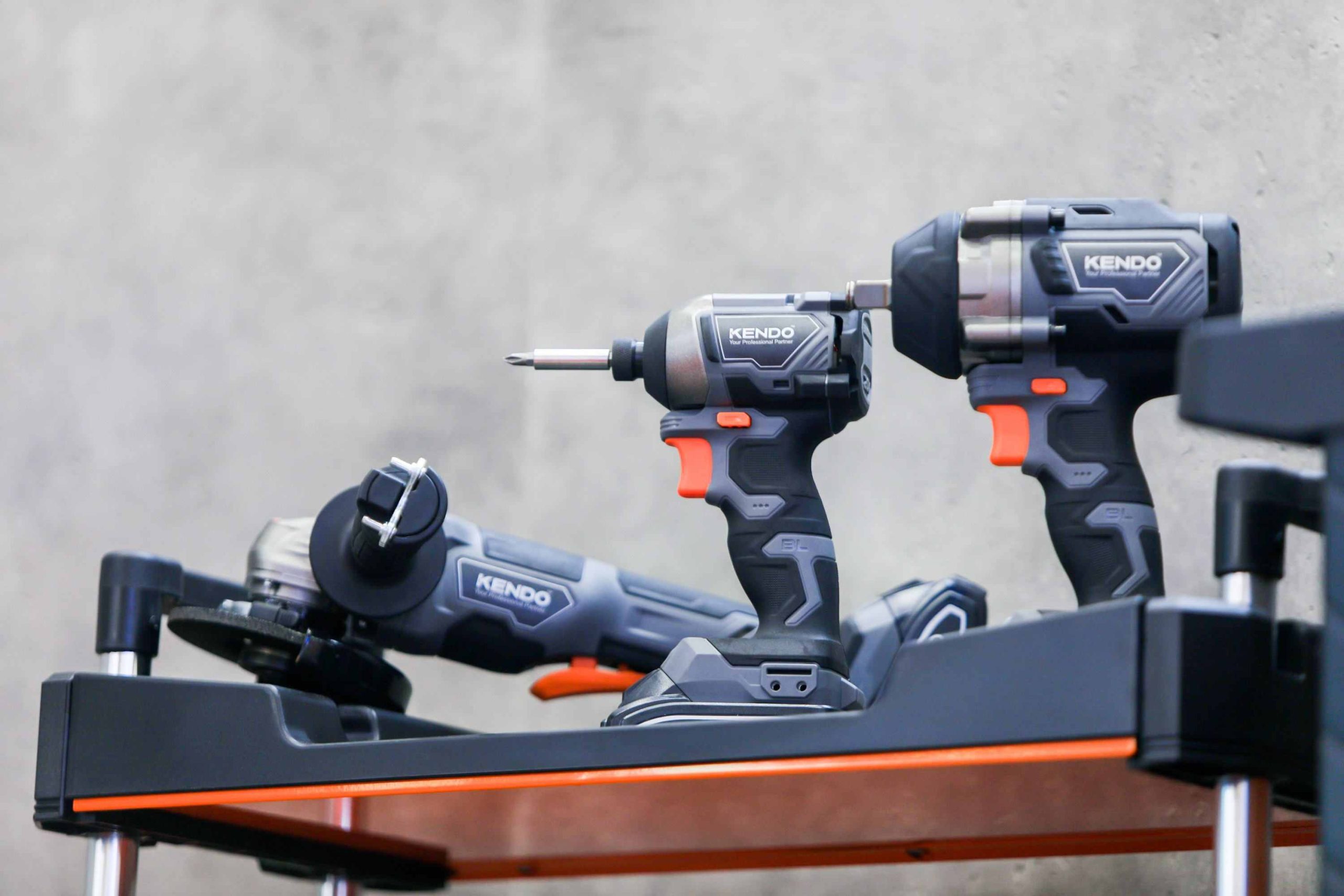
The first-order mistake is treating unit price as the main variable. In wholesale hardware, the number that decides whether a line makes money is the cost of the goods that come back. A cheap line that generates warranty claims costs more per sold unit than a mid-tier line that does not, because the distributor absorbs the freight on the replacement, the labour of the swap and the reorder that never happens. That is why an experienced distributor in Tashkent asks about consistency and spare parts before negotiating hard on price. Your quotation should answer that question before they ask it, with a parts list, a warranty position and a realistic lead time.
Which Hardware Categories Carry the Volume in Uzbekistan
Six categories do most of the work, and in each one the tier that moves is the middle, not the premium brand line and not the bottom of the market.
| Category | Demand driver | Tier that moves | Entry risk |
|---|---|---|---|
| Cordless power tools | Fit-out work and small contractors | 12 V and 18 V classes with spare batteries | Battery and charger compatibility, after-sales |
| Hand tools | Bazaar and retail trade | Forged mid-tier | Freight weight, brand substitution |
| Fasteners and fixings | Fit-out, facades, joinery | Zinc-plated and stainless by application | Grade confusion, corrosion claims |
| Building hardware | Housing completion, doors and windows | Mortise locks, cylinders, hinges, handles | Cylinder and keyway compatibility |
| Abrasives and cutting discs | Metalwork and construction | 125 mm and 230 mm discs | Safety marking and traceability |
| PPE | Site enforcement and contractor supply | Helmets, gloves, eyewear, harnesses | Certification and marking |
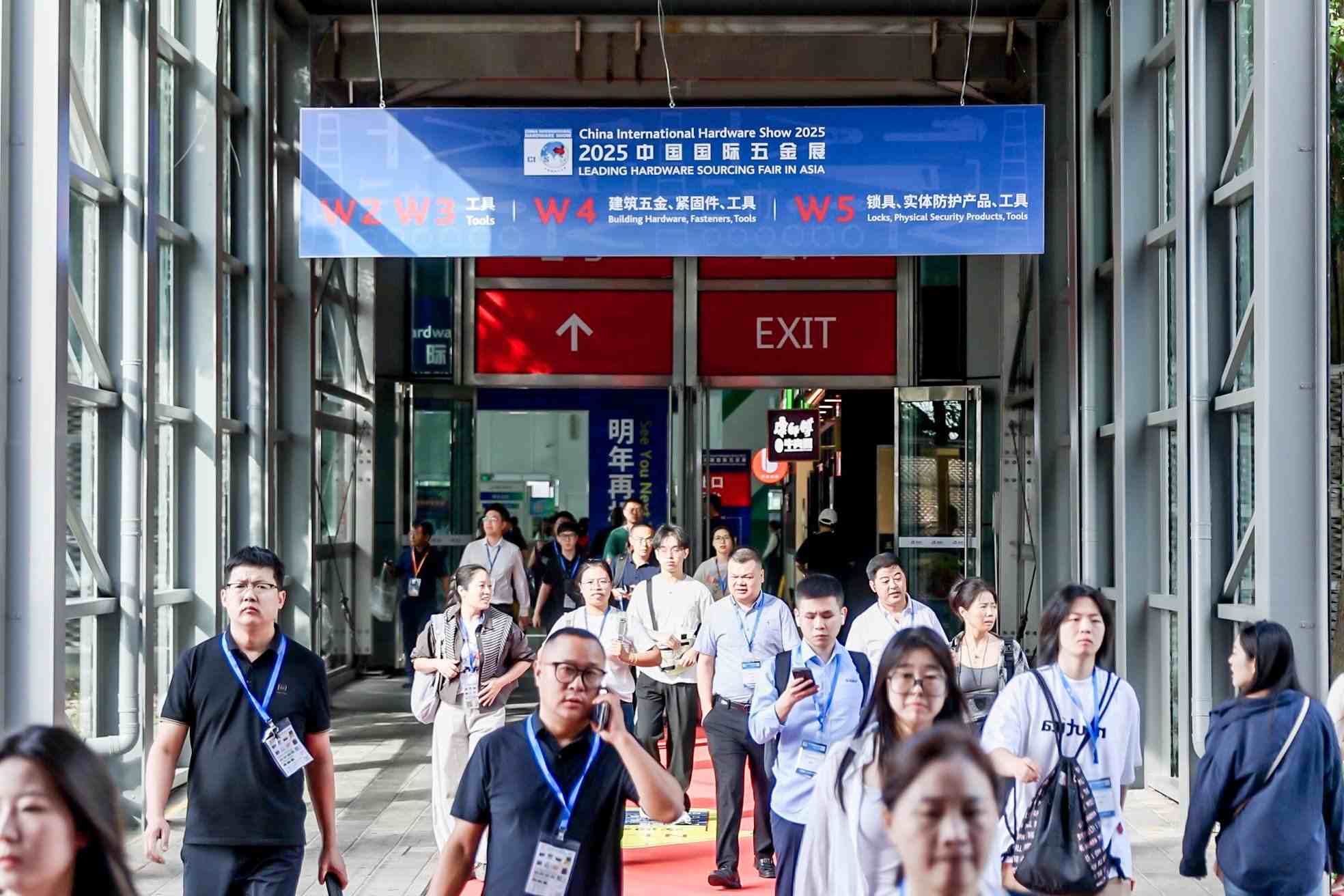
A cordless tool is a battery platform before it is a product. Once a distributor sells a customer a drill with two batteries, every later purchase follows that platform: the spare battery, the bare tool, the charger, the work light. The platform decision locks in the next several years of reorders, which is why the brand with the widest bare-tool range usually beats the brand with the lowest drill price. A supplier who cannot support a platform with spares should not be selling into it.
Fasteners carry a similar trap. Stainless is not one specification. A2 and A4 grades are not interchangeable where chlorides are present, and an anchor chosen for a facade is not the same item as an anchor picked from a price list. A distributor who cannot explain the difference sells the wrong item once and then spends a season handling the complaint. Abrasives and PPE carry the shortest path to trouble of all, because a disc or a helmet without correct safety marking and traceability becomes a site liability rather than a product.
What the Construction Programme Actually Buys
The programme behind those headline numbers is real, and it is also indirect. Public works are tendered, and tender documents name approved brands, request certificates and often specify country of origin. The party that actually buys hardware is the subcontractor installing it, and that subcontractor buys consumables locally, in small lots, at short notice, usually on credit. So the wholesaler’s customer is the installer, and the volume sits in consumables rather than in the categories that appear in the announcement.
The fit-out lag is the part most suppliers misread. A residential block consumes structural materials first and hardware last. Locks, hinges, handles, sanitary fittings, wiring accessories and fixings land at the finishing stage, months after the frame goes up. If you build a stock position when a project is announced, you are early. If you build it at handover, you are late.
The public segment also does not pay the way a retailer pays. A distributor who wins project supply has to carry the documentation and then carry the receivable, because payment can run well past the delivery date. Larger orders and longer receivables arrive together. That is a tradeoff to price into the quotation, not a reason to avoid the segment.
Certification and Documents That Decide Whether Goods Clear
The most expensive assumption in this market is that a Eurasian certificate covers Uzbekistan. It does not. EAC marking belongs to the Eurasian Economic Union, whose members are Armenia, Belarus, Kazakhstan, Kyrgyzstan and Russia [1]. Uzbekistan is not a member. Goods cleared for Kazakhstan under EAC rules still have to satisfy Uzbek requirements, which run through the national conformity system. Coverage is set product group by product group rather than category-wide, so the question is never “does hardware need certification” but “which document applies to this exact model and customs line”.
Power tools add a second layer. The IEC 62841 series is the reference safety standard family for hand-held motor-operated tools [2], and a test report to that series is evidence that the design was assessed against a recognised safety baseline. It is not evidence of Uzbek market admission, and no certificate from a European test house substitutes for the national document. Both can be true at once, and a supplier who conflates them is telling you something about how they will handle a claim.
Documents to request before you quote
A certificate of conformity or declaration that names the exact model, not just the product family.
A test report from an accredited laboratory, with the standard and edition cited.
Label and instruction artwork in the languages your importer confirms are required, usually Russian and Uzbek.
The customs classification and tariff line, confirmed in writing by the importer’s broker rather than guessed.
Packaging that survives rail handling and transhipment, with carton strength and pallet dimensions agreed.
A spare parts list and warranty terms the distributor can honour without shipping parts back.
The model family trap
A certificate issued for a product family often stops at the models tested on the day. Change the plug, the charger or the battery pack and the shipped item may sit outside the tested configuration. The same applies to a lock cylinder when the keyway changes. Before a repeat order, confirm that the document still describes what is in the carton, and keep the version you relied on. Documentation problems surface at the border, where they cost demurrage and a customer relationship at the same time.
Price, Payment and Freight Costs That Decide the Margin
Uzbekistan is one of only two doubly landlocked countries in the world, so every container crosses at least two borders before it reaches Tashkent [3]. That geography shapes the cost structure in a way that surprises suppliers used to sea freight. For bulky hardware, the limit is volume rather than weight. A container of door handles, buckets or long handles hits its volumetric ceiling long before it reaches its weight limit, so nested design, carton dimensions and pallet height change the landed cost per unit more than a small reduction in the FOB price. Quote the freight per cubic metre before you quote the discount.
Freight choices that change the landed cost
Rail moves full containers from China through Kazakhstan on the 1520 mm gauge network. Road handles part loads and first orders that do not fill a box. The tradeoff is straightforward: rail costs less per unit and spends longer at border crossings, road costs more and arrives sooner with less coordination at your end. A China to Kyrgyzstan to Uzbekistan line has been under discussion for years and would add a southern option, but it is not a routing assumption to build a 2026 price on.
Payment structures that survive a first order
A deposit with the order and the balance against copies of shipping documents is the common structure for a first transaction, because each side holds something. Letters of credit exist and work, but the fees and paperwork rarely suit a small first order. Open account terms are earned across repeat orders rather than negotiated at the start. Price in the currency as well: since the currency liberalisation the som has traded at a single official rate, so the official rate rather than a street rate sets the buyer’s cost, and a buyer watching that rate will ask for a price validity window. On terms of sale, DDP looks convenient until you need a local entity to act as importer of record. DAP with a local broker usually keeps customs risk with the party best placed to manage it.
Signals Worth Watching in 2026
Most public numbers about this market measure something other than your order book. Separate them before you plan a stock position.
| Signal | What it measures | What it can support | Do not infer |
|---|---|---|---|
| Project announcements | Planned public investment | Medium-term timing of fit-out demand | That a funded project will buy your SKU |
| Import statistics by customs line | Volume and origin of goods entering | Where supply comes from and at what scale | That a growing line is undersupplied; it may already be crowded |
| Exhibitor counts at a regional fair | Supplier interest in the region | Who is willing to be compared in one place | Visitor demand or order volume |
| Bazaar price movement | Local sell-through and stock pressure | Whether distributors are clearing or holding | National demand; bazaar pricing is local and cash-driven |
| Search interest in a category | Research activity in that keyword set | When buyers are looking | Commercial demand |
Three re-check actions belong on your calendar for this year. Confirm the visa-free entry list for your passport against the current government list before booking travel, because the group of eligible countries is revised periodically. Confirm the conformity requirement for each customs line against the current national list rather than last season’s. And re-read the tariff schedule with your importer’s broker before you fix a landed price, since a changed line moves the margin more than a freight negotiation.
Then run a small test instead of a large forecast. Pick one category, one distributor and three SKUs. Measure sell-through, return rate and reorder interval over a single quarter. That result tells you more about this market than any macro figure, and it costs less than being wrong at container scale.
Meet the Supply Side in Tashkent This November
Comparing battery platforms, fastener grades and lock families across a year of email is slow. CAIHE 2026, the Central Asia International Hardware Expo, runs 24 to 26 November 2026 at Uzexpocentre in Tashkent, in Pavilions 3 and 4, organised by Koelnmesse and Inter Dialog with the Chinese Chamber of Commerce for Machinery and Electronics (CCCME) and CCI Uzbekistan as partners. More than 200 international exhibitors are expected across power tools, hand tools, fasteners, building hardware, PPE and industrial accessories, alongside distributors from Uzbekistan, Kazakhstan, Kyrgyzstan and the wider region.
This is a first edition, so there are no past visitor figures to quote and we will not invent them. What is fixed is the date, the venue and the fact that suppliers you would otherwise visit across three countries will be in one hall.
The next step is to pre-register for a visitor badge and send your category list to zoey.yue@koelnmesse.cn or call +86-21-6390 6161 ext. 828. Tell us which customs lines you buy and we will point you at the exhibitors that match before you book a flight. Buyers with confirmed purchasing plans can also ask about the Hosted Buyer Programme.
FAQ
How large is the hardware wholesale market in Uzbekistan?
There is no reliable public figure for wholesale hardware turnover here, and any single number deserves suspicion. The usable measures are indirect: public construction programmes, import volumes by customs line and, at the level where you actually operate, how often a distributor reorders. A distributor who reorders a line every quarter tells you more about market size than a macro report does. If a supplier or adviser quotes a market value without naming the source and the year, ask for both or discount the figure.
Do I need EAC certification to sell hardware in Uzbekistan?
No. EAC marking belongs to the Eurasian Economic Union, and Uzbekistan is not a member [1]. A product certified for Kazakhstan or Russia still has to satisfy Uzbek requirements through the national conformity system. Coverage is set product group by product group, so confirm which document applies to your exact model and customs line with the importer and a local certification body before quoting. Check that any certificate you are shown names the model you are shipping rather than a wider family.
What payment terms are realistic on a first order?
A deposit with the order and the balance against copies of shipping documents is the usual structure for a first transaction, because both sides hold something. Letters of credit work but the fees and paperwork rarely suit a small first order. Open account terms are earned over repeat orders rather than negotiated at the start. Agree the terms of sale, the currency and a price validity window at the same time, since movement in the som passes straight into the buyer’s cost.
Which hardware products sell best in Tashkent?
Mid-tier cordless tools, hand tools, fixings, building hardware for fit-out and PPE carry most of the volume. The more useful answer is that the channel decides, not the category. A bazaar wholesaler and a project trading house can stock the same drill and need completely different support, one wanting fast reorder and a low minimum, the other wanting certificates and credit. Choose the channel, then the SKU list, then the tier.
References
[1urasian Economic Union, “Member states,” eaeunion.org, 2026. [Online]. Available: https://eaeunion.org/
[2] IEC 62841-1, “Electric motor-operated hand-held tools, transportable tools and lawn and garden machinery. Safety. Part 1: General requirements,” International Electrotechnical Commission, Geneva, 2014.
[3] United Nations Office of the High Representative for the Least Developed Countries, Landlocked Developing Countries and Small Island Developing States, “Landlocked developing countries,” un.org, 2026. [Online]. Available: https://www.un.org/ohrlls/
Contact us
-

Ms. Zoey Yue
+86-21-6390 6161 ext. 828
zoey.yue@koelnmesse.cnMr. Edward Gao
Tel: +86 10 6590 7766-765
Fax: +86 10 6590 6139
Edward.Gao@koelnmesse.cn